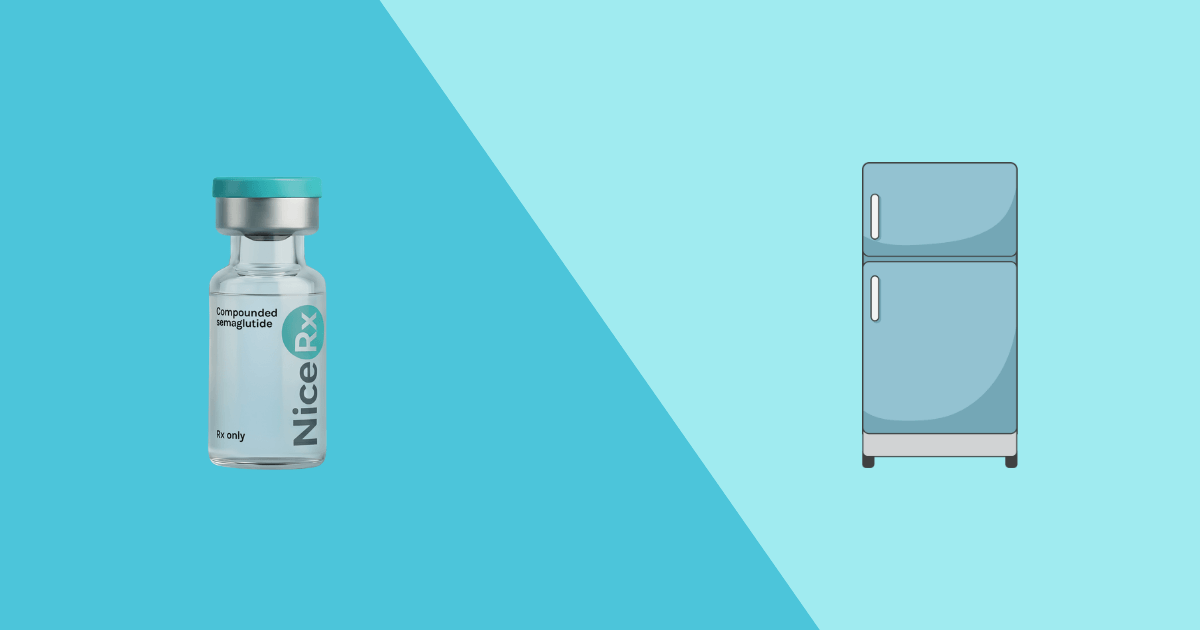
How long does compounded semaglutide last in the fridge?
You just spent a significant amount of money on your compounded semaglutide injections. You carefully placed it in the fridge, but now you’re staring at the vial, wondering: Is it still safe to use? Can I stretch it just one more week?
Key highlights
- The shelf life of compounded semaglutide depends on the beyond-use date (BUD) set by the compounding pharmacy.
- Unopened vials can usually be kept refrigerated for 30–90 days, based on the beyond-use date indicated by the pharmacy.
- Once a compounded semaglutide vial is punctured, it can typically be used safely for 28–30 days when stored properly in the refrigerator.
- Always check with your pharmacy for the exact instructions on how to store semaglutide and its expiration date.
Compounded semaglutide is made by a licensed compounding pharmacy in small quantities to meet the specific needs of a patient. It may contain the same active ingredient as brand-name medications like Ozempic and Wegovy, but the pharmacist can adjust the formulation based on individual requirements.
Compounded semaglutide is not approved by the U.S. Food and Drug Administration (FDA), so its safety and effectiveness are not officially evaluated. It is suitable for patients who need a custom formulation that isn’t commercially available, only when it is prescribed by a healthcare professional.
Compounded medications are different than the brand-name drugs. They don’t come with factory-sealed expiration dates, and their shelf life is determined by the compounding pharmacy that prepares them.
Worried about wasting expensive medication? Continue reading to understand how long compounded semaglutide lasts in the fridge, why the 28-day rule exists, and 3 signs it’s time to toss the vial.
Compounded vs. brand-name: Why storage isn’t a one-size-fits-all
Semaglutide is a GLP-1 receptor agonist medication. It works by activating GLP-1 receptors in the body, which mimic the effects of a natural hormone called glucagon-like peptide-1 (GLP-1).
When these receptors are activated, several helpful effects occur. The medication helps the pancreas release insulin when blood glucose levels rise, reduces the amount of sugar released by the liver, and slows down how quickly food leaves the stomach, though some patients may experience constipation or, in rare cases, pancreatitis.
It also affects the brain’s appetite centers, helping people feel full sooner and stay satisfied longer. Together, these actions help in blood sugar control and support weight management.
Semaglutide is sold under several brand names that are approved for specific medical uses, including Ozempic, Wegovy, and Rybelsus.
- Ozempic is mainly prescribed to help control blood sugar in people with type 2 diabetes.
- Wegovy is approved for weight management in people with obesity or overweight.
- Rybelsus is the oral (tablet) form of semaglutide used for diabetes management.
Compounded semaglutide is prepared by a licensed compounding pharmacy or outsourced facility and may be customized for a patient’s needs. It is not FDA-approved and may have a different formulation than brand-name versions.
Compounded versions often start as a powder. At the pharmacy, it is mixed with bacteriostatic water, which contains a preservative called benzyl alcohol to help prevent bacterial growth. This mixing process turns the powder into a liquid that can be used for injections.
It may be compounded to:
- Provide a specific dose for a patient.
- Change how the medication is given.
- Avoid allergies or sensitivities to certain ingredients.
Brand-name semaglutide, such as Ozempic and Wegovy, comes in prefilled injection pens made by the manufacturer, Novo Nordisk. These pens contain specific preservatives and are produced under strict quality controls.
An unopened Ozempic pen can be stored in the refrigerator for up to 56 days before first use. Once the pen is used for the first time, it should be used within 28 days, whether it is kept at room temperature or in the refrigerator.
Wegovy pens are also stored in the refrigerator before use. They should be kept in the refrigerator until the expiration date on the label, but they can be kept at room temperature for up to 28 days if needed. Once used, the pen should be discarded after the injection, since Wegovy pens are intended for single use.
Compounded semaglutide is different because it is prepared by a compounding pharmacy and usually comes in a multi-dose vial instead of a prefilled pen, with specific storage guidelines. Its shelf life depends on the beyond-use date (BUD) provided by the pharmacy, but it typically lasts about 30 to 90 days when stored properly in the refrigerator. Always follow the instructions provided by your pharmacy, because compounded medications may have different formulations and storage requirements.
Once you insert a needle into the vial, the sterile seal is broken. This allows small amounts of air and possibly bacteria to enter the vial. The preservative in the medication helps slow bacterial growth, but it only works for a limited time. Because of this, the countdown for safe use begins as soon as the vial is first punctured.
Compounded semaglutide has different ingredients or preservatives. As a result, the storage time and shelf life are different than brand-name medications.
Storage requirements for different forms of semaglutide
| Storage before first use | Storage after first use | Notes | |
|---|---|---|---|
| Ozempic (brand-name injection pen) | Store in the refrigerator at 36–46°F (2–8°C). | Use within 28 days. Can be kept at room temperature (up to 86°F / 30°C) or in the refrigerator. | Keep the pen cap on and protect from light. Do not freeze. |
| Wegovy (brand-name injection pen) | Store in the refrigerator at 36–46°F (2–8°C) until the expiration date. | Single-use pen; discard after one injection. If needed, it can be kept at room temperature for up to 28 days before use. | Do not freeze and keep in the original carton to protect from light. |
| Rybelsus (oral semaglutide tablets) | Store at room temperature (68–77°F / 20–25°C). | Not applicable. | Keep tablets in the original bottle with the desiccant to protect from moisture. |
| Compounded semaglutide (multi-dose vial) | Usually stored in the refrigerator at 36–46°F (2–8°C). | Shelf life depends on the pharmacy’s Beyond-Use Date (BUD), often 30–90 days after preparation or first puncture. | Follow the specific instructions from your compounding pharmacy, as formulations may vary. |
Understanding the timeline: What is the exact timeframe it really lasts in the fridge?
The shelf life for compounded semaglutide depends on the beyond-use date provided by the compounding pharmacy. When stored properly in the refrigerator at 36–46°F (2–8°C), it usually lasts about 30–90 days.
Once the vial is punctured for the first time, the sterile seal is broken, and the medication should generally be used within 28 days to reduce the risk of contamination and maintain its effectiveness. Always follow the specific storage instructions provided by the pharmacy.
Unopened vials
Compounded semaglutide vials have a beyond-use date (BUD) set by the compounding pharmacy. This date is printed on the vial label and tells you how long the medication can be safely used when stored properly. In most cases, the BUD is about 60–90 days from the date the medication was compounded, but it can vary depending on the pharmacy.
Opened vials
Once you insert a needle into the vial for the first time, the sterile seal is broken. Because air and possible bacteria can enter the vial, safety guidelines recommend using multi-dose vials within about 28 days after the first puncture. This rule helps reduce the risk of contamination and keeps the medication safe to use.
According to U.S. Pharmacopeia safety guidelines, multi-dose vials should be discarded within 28 days after the first puncture, unless the manufacturer provides different instructions.
Many compounded medications, including semaglutide, need to be kept in the refrigerator. Most compounded semaglutide vials should be stored in the fridge at 2–8°C (36–46°F).
Keeping the medication in the refrigerator helps in several ways:
- Slows down chemical reactions that can break down the medication
- Protects the active ingredients from heat
- Helps maintain the medication’s potency and effectiveness
- Slows the growth of bacteria, mold, and other microorganisms
- Reduces the risk of contamination that could make the medication unsafe
Proper storage is very important for compounded medications. If the medication is not stored correctly, it can be damaged or become unsafe to use. Without the right storage conditions, compounded semaglutide can lose its stability, effectiveness, and safety.
Shelf life of compounded semaglutide
Unlike brand-name medications, compounded semaglutide doesn’t have a standard expiration date. Instead, the semaglutide compounding pharmacy provides a beyond-use date based on the formulation’s stability, usually 30–90 days.
Several factors may affect how long compounded semaglutide stays safe and effective after it has been prepared.
Light exposure
One important factor is light exposure. Direct sunlight or strong artificial light can gradually damage the medication and break down its active ingredients, which may reduce its effectiveness.
Always keep the vial in a dark, cool place, preferably inside its original packaging or in the refrigerator, where it is protected from light.
Air contamination
Each time the vial is opened or accessed with a needle, small amounts of air and moisture may enter the container. Over time, this exposure can increase the risk of contamination and may allow bacteria or mold to grow, potentially affecting the medication’s safety and quality.
Proper handling, using sterile needles, and limiting unnecessary opening of the vial can help reduce this risk.
Storage conditions
Storage conditions also play a crucial role in maintaining the stability of compounded semaglutide. Fluctuations in refrigerator temperature can affect the medication’s chemical stability and shorten its usable life.
To help preserve its effectiveness, the medication should be stored consistently in a refrigerator at a temperature between 2–8°C (36–46°F) and should not be frozen.
Maintaining a stable storage environment helps ensure the medication remains safe and effective for the recommended period.
What happens to semaglutide when it is stored in the refrigerator past its beyond-use date?
Keeping compounded semaglutide in the refrigerator past its beyond-use date can cause several potential risks.
Breakdown of the drug
Even when stored properly, the medication’s stability cannot be guaranteed after the beyond-use date. Over time, the drug’s active ingredients may break down, reducing its effectiveness. As the chemical structure of the medication gradually deteriorates, its therapeutic effect may become less reliable.
Loss of potency
Another possible concern is the loss of potency. When semaglutide loses strength, the medication may become weaker and may not provide the same blood sugar or weight-management benefits as expected.
This reduced effectiveness can make treatment less predictable and may lead people to believe they need a higher dose, which should never be adjusted without medical guidance.
Visible signs of spoilage
In some cases, expired or compromised medication may also show visible signs of spoilage. These can include color changes, the presence of floating particles or cloudiness in the liquid, or an unusual or unpleasant odor. Such changes may indicate that the medication has degraded or become contaminated.
For safety, any semaglutide that appears unusual or has passed its beyond-use date should be discarded. Using expired or damaged medication may be ineffective and, in some situations, potentially unsafe.
Always discard any suspicious or expired medication. Using old or damaged medication can be ineffective and, in some situations, potentially unsafe.
Why is the vial only good for 28 days after puncture?
Multi‑dose vials like compounded semaglutide are generally considered safe to use for up to 28 days after they are first punctured or opened when stored in the fridge or at a controlled temperature. This 28‑day guideline comes from the USP Compounding Standards, which sets standards for sterile compounding and states that an opened multi‑dose vial with antimicrobial preservative should be discarded within 28 days unless the manufacturer specifies otherwise.
The vial contains bacteriostatic water with benzyl alcohol, which helps prevent bacteria from growing. Over time, this protection becomes weaker.
Every time you insert a needle in the vial’s stopper, the protective “shield” around the medication gets a little weaker. By day 28, it may no longer be strong enough to keep the medication completely safe.
Some pharmacies may provide a 30-day beyond-use date, but the 28-day rule is the safest. Always follow the date printed on your vial.
The ideal fridge temperature for storage
Compounded semaglutide needs to be stored at the right temperature, not too hot and not too cold. If it’s too warm, the protein in the medication can break down. If it freezes, the molecular structure is destroyed, and the medication becomes useless.
Keep the fridge between 36°F and 46°F (2°C–8°C). This range protects the peptide and keeps the medication effective.
Avoid placing the vial in the fridge door, as this area experiences frequent temperature fluctuations from opening and closing. Do not place it against the back wall, where it could accidentally freeze. The best spots are the middle shelf, and the vial should be kept upright to prevent spills and maintain safety.
If a compounded semaglutide vial freezes, it is no longer safe to use. Freezing causes the peptide proteins to unfold and clump together, which destroys the medication’s structure and makes it ineffective.
Even if the vial is thawed and the liquid looks normal, the molecular damage cannot be reversed, so the medication will not work as intended and could be unsafe. For this reason, any vial that has frozen should be discarded immediately.
Always keep compounded semaglutide in its original box while storing it in the refrigerator. The original packaging helps shield the medication from light, which can break down the peptide proteins over time and reduce its effectiveness.
Exposure to sunlight or bright indoor light can cause the medication to degrade faster. Storing it in the box ensures it stays potent and safe for use throughout its shelf life.
Tips to keep compounded semaglutide safe and effective in the fridge:
- Refrigerate at a steady temperature between 2–8°C (36–46°F)
- Avoid storing near the fridge door, where temperatures fluctuate more.
- Use a thermometer to check the fridge temperature regularly.
- Never freeze the medication or put it in very cold areas.
- Keep the vial upright to prevent leaks or spills.
- Store in the original packaging to protect it from light.
- Check the expiration date occasionally.
- Use a cooler with ice packs if the power goes out to keep it cold.
- Keep the fridge away from heat sources like ovens or direct sunlight
Tips for using semaglutide after removing it from the fridge:
- Make sure the medication comes from a reputable pharmacy that requires a prescription.
- Ask your pharmacist if you have any questions or concerns.
- Learn the full storage instructions so you know exactly how to handle the vial once you receive it.
- Check the medication carefully before use for any changes in appearance.
- Take out only the amount needed for one dose.
- Return the vial to the fridge immediately after using it.
- Limit the time the medication spends outside the refrigerator.
- Follow all instructions given by the pharmacy to keep the medication safe and effective.
Beyond-use-date (BUD) vs. expiry date
A beyond-use date is the date a compounded medication should be used by. Compounding pharmacies specify this date based on stability testing to ensure the medication stays safe and effective for the time it’s used.
Compounded medications usually don’t have the same preservatives as mass-produced drugs, and they are often made in custom formulations. Because of this, their shelf life is shorter than brand-name products like Ozempic or Wegovy.
The BUD is printed on the pharmacy label. Always check this date before using the medication and follow it carefully to ensure safety and effectiveness.
Expiration date
The expiration date is printed on commercially manufactured medications and indicates the final day the manufacturer guarantees the medicine will remain safe and effective when stored as recommended.
This date is determined through stability testing conducted by the manufacturer to ensure the drug maintains its strength, quality, and purity over time.
After this date, the medication may begin to lose its strength or stability, its potency or effectiveness, and in some cases, its chemical composition could begin to change, which means it may not work as intended.
For this reason, manufacturers and healthcare professionals generally advise against using medications beyond their listed expiration date.
Beyond-use date
The beyond-use date (BUD) is provided by a compounding pharmacy for compounded medications that are specially prepared or customized for an individual patient.
Unlike commercially manufactured medications, compounded drugs are mixed in smaller batches and may not undergo the same long-term stability testing as brand-name drugs.
The beyond-use date indicates the last day the medication should be used to ensure its safety and effectiveness. This date is typically shorter than a standard expiration date for a commercial product because compounded medications may contain fewer preservatives and can be more sensitive to storage conditions such as temperature, light, and contamination.
Following the beyond-use date helps ensure that the medication remains safe and performs as intended.
Why you should never freeze compounded semaglutide
Freezing semaglutide is not safe. Semaglutide is a peptide (a type of protein). Freezing can cause the protein structure to unfold and clump together, which makes the medication ineffective. Even if the liquid looks clear after thawing, the molecular structure may be damaged.
If your fridge becomes too cold and ice crystals form in the vial (accidental freezing), discard the medication. Do not use it, as freezing can ruin its safety and effectiveness.
Can compounded semaglutide be stored at room temperature?
It’s safe to leave a vial out at room temperature for a few minutes while preparing to take your injection.
If compounded semaglutide is left out on the counter for many hours or overnight, it should not be used, as prolonged exposure can reduce its effectiveness and safety.
High temperatures, especially during summer (above 86°F / 30°C), can ruin the medication within hours. Always keep the vial in the refrigerator and limit the time it spends at room temperature.
How to tell if semaglutide has gone bad
Look for the following warning signs:
- Cloudiness: The liquid should be completely clear, like water. If it looks cloudy, milky, or hazy, bacteria or fungi may be growing. Throw it away immediately.
- Particles: Look for specks, fibers, or sediment floating or at the bottom. This means the medication is contaminated or breaking down. Do not use it.
- Discoloration: The medication should be colorless. If it has a yellowish tint, the peptide may be degrading. Discard the vial.
- Bubbles are normal: Small air bubbles after drawing the medication into a syringe are normal and not a sign of damage.
- Loss of effectiveness: If the medication doesn’t seem to work, it may be because it was stored incorrectly or has degraded, not because of the dose. Always check the vial before using.
Shipping and delivery: My semaglutide arrived warm
Compounding pharmacies typically ship compounded semaglutide using insulated boxes and gel packs to keep the medication cold. This helps maintain the potency and safety of the medication during transit.
Research shows that semaglutide can usually withstand up to 72 hours at room temperature during shipping, even if the ice packs melt, as long as it doesn’t get exposed to extreme heat.
If you receive a vial that looks damaged, overheated, or has ice packs that have melted, contact the pharmacy immediately for further guidance.
Checklist for storing compounded semaglutide
Compounded semaglutide is not FDA-approved and should only be used under the supervision of a licensed healthcare provider as part of a comprehensive treatment plan.
While the FDA doesn’t provide detailed storage instructions for compounded semaglutide, they do recommend general safety measures:
- Store at a controlled temperature 36°F–46°F (2°C–8°C).
- Keep it in the refrigerator for best results (main body of the fridge, not the door)
- Never freeze the medication.
- Keep in the original box until opened.
- Maintain the recommended temperature range consistently.
- Control humidity to prevent bacterial or mold growth
- Note the date you first punctured the vial on the label with a marker.
- Protect the vial from excessive light to preserve the medication.
- Check for cloudiness or particles before each dose.
- Discard 28 days after first puncture.
These steps help keep compounded semaglutide safe and effective.
Risks of using degraded medication
To keep compounded semaglutide effective, always store it in the refrigerator. Using expired or improperly stored medication can reduce its effectiveness or even be unsafe. Always follow the storage instructions provided by the pharmacy.
When the medication is exposed to unsuitable conditions, such as excessive heat, temperature fluctuations, or improper handling, the stability of its active ingredients may be compromised. As a result, the medication may not work as expected.
Improper storage can cause:
Temperature changes that break down the active ingredients
Frequent temperature fluctuations can affect the stability of compounded semaglutide. When the medication is exposed to temperatures outside the recommended storage range, the chemical structure of its active ingredients may begin to break down.
This degradation can reduce the medication’s ability to work effectively and may shorten the time it remains safe to use.
Reduced effectiveness if exposed to heat
Exposure to heat can significantly reduce the effectiveness of semaglutide. High temperatures may damage the active compounds in the medication, causing it to lose strength over time.
As a result, the medication may not deliver the expected therapeutic benefits, such as supporting blood sugar control or weight management.
Harmful byproducts that may cause potential side effects
When a medication degrades due to improper storage, its chemical composition can change. In some cases, this breakdown process may produce unwanted byproducts.
These substances may increase the risk of irritation, unexpected reactions, or other side effects when the medication is used.
Serious health risks if the medication is degraded
Using a medication that has significantly degraded can create potential health risks. If the drug’s strength becomes unpredictable or its composition changes, it may not provide the intended treatment benefits and could lead to unexpected effects.
This is why using medications within their recommended storage guidelines and time limits is important.
Loss of potency from extreme temperatures or humidity
Extreme temperatures or exposure to high humidity can cause compounded semaglutide to lose potency. When the medication becomes less potent, it may deliver a lower dose than intended, making treatment less effective.
Maintaining consistent storage conditions helps preserve the medication’s strength and reliability.
Infection risks
Using expired or improperly stored semaglutide from a multi-dose vial may increase the risk of infection. Each time a vial is accessed with a needle, there is a possibility that small amounts of bacteria or other microorganisms can enter.
If the medication is stored incorrectly or kept beyond its recommended time frame, these microorganisms may multiply. Injecting contaminated medication could potentially lead to local infections at the injection site or other health complications.
Stalled weight loss
When semaglutide loses its potency due to expiration or degradation, it may not work as effectively as intended. For people using the medication as part of a weight management plan, reduced potency can lead to slower progress or stalled weight loss.
This can make the treatment less reliable and may result in wasted time, effort, and financial resources without achieving the expected benefits.
Allergic reactions
Over time, the chemical composition of a medication can change as it begins to break down. These changes may alter how the body reacts to the drug.
In some cases, degraded medication may trigger unexpected allergic or sensitivity reactions, even in individuals who previously tolerated the medication well. Such reactions could include redness, itching, swelling, or other signs of an adverse response.
FAQs
Can I use compounded semaglutide after 30 days if it still looks clear?
You should not use compounded semaglutide after 30 days, even if it looks clear. You can’t see bacteria, but using the medication could still potentially make you sick. Using the medication past the 28-day limit may cause serious infections. It’s safest to follow the 28-day rule.
Does compounded semaglutide expire if it’s never been opened?
Yes. Even if you never opened it, compounded semaglutide can expire. Look at the “beyond-use date” on the label. If it’s stored in the fridge and unopened, it’s usually safe until that date. Once you puncture the vial, you have 28 days to use it.
I left my semaglutide out of the fridge overnight. Is it ruined?
If your semaglutide was left out just overnight and the room was cool (under 86°F/30°C), it’s probably still safe to use it. Check with the pharmacy and put it back in the fridge right away. If it was left out for several days or somewhere hot, throw it away.
Why does my pharmacy’s date say 30 days, but online it says 28?
Different pharmacies may use slightly different ingredients or testing methods, which is why some say 28 days and others say 30 days. The expiration date on your pharmacy label is the one you should follow because it applies to your specific medication. If you are unsure, you can call the pharmacy to confirm.
Can I transfer my semaglutide to a different vial?
No, you should not transfer semaglutide to another vial. Doing this breaks the sterile seal and increases the risk of contamination or infection. Always keep the medication in the original vial provided by the pharmacy.
Does light affect semaglutide?
Yes, light can affect semaglutide and may reduce its stability over time. To protect the medication, it’s best to keep it in its original box when not in use. This helps shield it from light exposure.
What if my power goes out?
If the power goes out, keep the medication in the refrigerator and avoid opening the door to maintain the cold temperature. If the outage lasts longer, place the vial in a cooler with an ice pack to keep it cool but not frozen. Once power returns, put it back in the refrigerator as soon as possible.
Does compounded semaglutide have a different shelf life than non-compounded semaglutide?
Yes, there are differences. Compounded semaglutide usually has a shorter shelf life than non-compounded (brand-name) versions because the formulations and preservatives may vary, unlike other brand-name medications.
What are the signs that semaglutide has gone bad?
You may notice changes in the liquid, such as discoloration, cloudiness, or small particles floating in it. If the medication looks different from its usual clear appearance, it should not be used.
Conclusion: Safe storage tips for compounded semaglutide
An unopened vial of compounded semaglutide can be stored in the refrigerator until the beyond-use date printed on the vial.
Compounded semaglutide is generally safe for up to 28 days after the vial is first punctured, as long as it is stored properly in the refrigerator.
Storing the vial at the right temperature (36–46°F / 2–8°C) and protecting it from freezing, heat, and light is essential to maintain its potency, safety, and effectiveness.
As soon as you first puncture the vial, set a “toss date” reminder on your phone. This helps ensure you use the medication within 28 days and avoid taking expired or degraded semaglutide.
Always discard the medication by the beyond-use date on the pharmacy label and handle the vial carefully during use and transit.
Compounded semaglutide can be a powerful tool for weight loss and overall wellness, but it must be handled carefully. When in doubt, throw it out. Using a compromised vial is not worth the risk.