Orforglipron vs tirzepatide: How the new oral pill compares with injectable tirzepatide
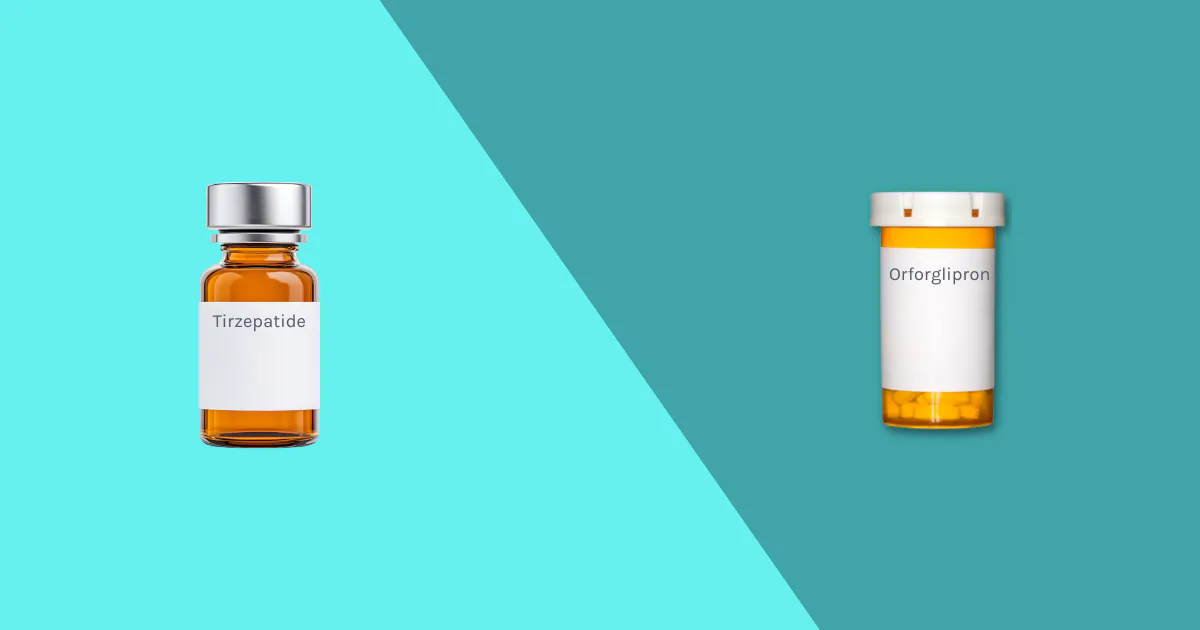
Orforglipron vs tirzepatide: which next-generation weight-loss drug delivers better results, fewer side effects, and real-world convenience?
Key highlights
- Tirzepatide is a once-weekly injectable medication that acts as a dual agonist of GLP-1 & GIP receptors, while orforglipron is a daily oral GLP-1 receptor agonist.
- Tirzepatide shows greater weight loss (16 to 22.5% of body weight) compared to orforglipron (12.4% at a 36 mg dose). However, orforglipron may show faster results than tirzepatide.
- Orforglipron is a daily oral pill that can improve adherence for patients who have needle aversion or want an easy-to-use option. In comparison, tirzepatide is a once-weekly injection that is good for those who prefer less frequent dosing.
- Both medications have similar gastrointestinal side effects (nausea, vomiting, diarrhea, and constipation), which are usually mild-to-moderate and can be managed with gradual dose titration and dietary adjustments.
- Tirzepatide is FDA-approved and more expensive than oral orforglipron. It usually requires prior authorization. Orforglipron is an investigational drug and is still in Phase 3 trials. The medication is expected to launch in 2026.
GLP-1 drugs have become increasingly popular over the past few years. You might have heard about them in headlines, social media feeds, and celebrity interviews. Many people struggle to lose weight despite trying low-calorie diets, exercise, and lifestyle changes. GLP-1 medications have gained popularity due to their efficacy for weight management.
Tirzepatide is a powerful injectable medication that comes in two brand names: Mounjaro and Zepbound. The medication acts as a dual agonist at GLP-1 and GIP receptors. Its dual action makes it more effective than other GLP-1 medications. In contrast, orforglipron is an investigational medication that belongs to a class of GLP-1 receptor agonists. It is an oral pill that is taken daily. Currently, the medication has not been approved by the FDA and is in phase 3 clinical trials.
While exploring the potential benefits of orforglipron, you might wonder, is a convenient daily pill about to overtake the powerful weekly injection?
In this comprehensive article, you will learn how tirzepatide and orforglipron work in the body, which medication is more effective, and what the side effects and safety concerns are for each medication. This article will also explain cost, availability, and insurance concerns to help you choose a suitable option.
What is tirzepatide (Mounjaro/Zepbound)?
Tirzepatide is a once-weekly subcutaneous (under the skin) injection manufactured by Eli Lilly. The medication is marketed by the brand names Zepbound and Mounjaro. Mounjaro is approved by the U.S. Food and Drug Administration (FDA) for treating type 2 diabetes, and Zepbound is indicated for body weight reduction in obese (BMI of 30 or greater) and overweight (BMI of 27 or greater) individuals and treating moderate to severe obstructive sleep apnea (OSA).
Tirzepatide is a dual (GLP-1 and GIP) receptor agonist, which means the medication activates both glucagon-like peptide-1 and glucose-dependent insulinotropic hormone receptors simultaneously. It is like hitting two hormonal accelerators at once to control blood sugar levels, slow down digestion, and reduce appetite, which helps manage body weight. The medication is taken as a once-weekly injection under the skin by using a pre-filled pen. It is typically injected into the abdomen, thigh, or upper arm.
Tirzepatide is approved by the FDA and is available under brand names Mounjaro and Zepbound. However, some people still face challenges with insurance coverage, cost, or occasional supply shortages due to its high demand.
What is orforglipron?
Orforglipron is an investigational, non-peptide, oral glucagon-like peptide-1 receptor agonist developed by Eli Lilly. It is an oral small-molecule drug that activates the GLP-1 receptor to control blood sugar levels and reduce appetite.
Orforglipron is a single receptor agonist. It targets only the GLP-1 receptors. Activation of GLP-1 receptors increases insulin release when blood sugar levels are high, reduces glucagon secretion, delays stomach emptying, and gives you a feeling of fullness to reduce appetite.
Earlier oral GLP-1 drugs, such as semaglutide (Rybelsus), are peptide-based, which means they are easily broken down by stomach acid and digestive enzymes. In contrast, Orforglipron has a non-peptide structure that can survive the digestive process. The medication is absorbed effectively in the gut and activates the GLP-1 receptor.
Orforglipron is taken as a once-daily oral pill. The medication is still in phase 3 clinical trials and is not approved by the FDA yet. Orforglipron is gaining attention because it offers the benefits of GLP-1 therapy in the form of daily oral pills, which are convenient to use. If Phase 3 clinical trials’ outcomes confirm its safety profile and effectiveness, orforglipron may be a game changer for weight loss.
Understanding their mechanism of action
Let’s explore how both medications work. The mechanism of action of tirzepatide and orforglipron is as follows:
Orforglipron mechanism of action
Orforglipron is an oral, non-peptide small-molecule medication. It works as a single GLP-1 receptor agonist and activates GLP-1 receptors in both the gut and the brain. GLP-1 is a naturally occurring hormone that regulates appetite and controls blood sugar levels. By mimicking its action, orforglipron works in the following ways:
- The medication reduces appetite by sending satiety (fullness) signals to the brain.
- It slows stomach emptying (the rate at which food leaves the stomach) and makes you feel full for longer after meals.
- Orforglipron improves glycemic control by increasing insulin secretion and decreasing glucagon release.
The medication is suitable for patients who prefer oral pills over injections.
Tirzepatide mechanism of action
Tirzepatide is a dual GLP-1 receptor and GIP receptor agonist, which is injected once weekly (subcutaneously). The dual action of tirzepatide is as follows.
- The medication activates GLP-1 receptors to suppress appetite, slow stomach emptying, and improve blood sugar levels.
- It activates GIP (glucose-dependent insulinotropic hormone) receptors to increase insulin secretion and improve overall metabolic health.
Activation of these two pathways simultaneously produces stronger weight loss and sugar control results than single GLP-1 receptor agonist drugs such as Novo Nordisk’s semaglutide (Ozempic and Wegovy).
The mechanisms of action of orforglipron and tirzepatide determine the effectiveness and side effects of both medications. Orforglipron works through a single GLP-1 pathway and provides effective appetite and sugar control. In contrast, tirzepatide activates both GLP-1 and GIP pathways, which often leads to greater weight loss compared to orforglipron. However, tirzepatide may have an increased risk of common gastrointestinal side effects such as nausea, vomiting, diarrhea, and constipation.
Orforglipron vs. tirzepatide: Effectiveness
Cross-trial comparisons of orforglipron and tirzepatide for weight loss have certain limitations as clinical trials differ in patient populations, study designs, baseline BMI, dose escalation schedules, and duration.
ATTAIN 1 clinical trial demonstrates that individuals with overweight and obesity who used the highest dose of orforglipron (36 mg) lost 12.4% of body weight after 72 weeks. In comparison, tirzepatide is more effective and provides stronger weight loss results (22.5 %) at the highest dose (15 mg).
However, the onset time to effect may differ. A meta-analysis reports that orforglipron had a faster onset (6.4 weeks) than tirzepatide (19.5 weeks). These findings come from comparisons across different studies, not from direct head-to-head trials.
Tirzepatide efficacy
Currently, tirzepatide is the most potent weight loss therapy. According to the SURMOUNT-1 clinical trial, adults (overweight or obese without diabetes) taking tirzepatide 5 mg, 10 mg, and 15 mg once weekly lost an average of 16%, 21.4%, and 22.5% of their body weight, respectively, after 72 weeks.
Orforglipron efficacy
According to the phase 3 ATTAIN‑1 clinical trial, people with obesity and overweight (without diabetes) who used the highest dose (36 mg) of orforglipron (an oral glucagon-like peptide‑1 receptor agonist) lost approximately 12.4% of body weight after 72 weeks. Orforglipron is still highly effective, but its efficacy for weight management is lower than that of tirzepatide.
| Orforglipron (Oral GLP-1) | Tirzepatide (Injectable GLP-1/GIP) | |
|---|---|---|
| Mechanism of action | Single GLP-1 receptor agonist | Dual GLP-1 and GIP receptor agonist |
| Route / frequency | Once-daily oral tablet | Once-weekly subcutaneous injection |
| Max average weight loss (72 weeks) | 12.40% | 22.50% |
| Key advantage | Convenient, easier administration, lower cost and suitable foor those who have needle aversion | Highest weight-loss efficacy |
The convenience factor: Pill vs. injection
Convenience plays an important role in long-term adherence to weight-loss and metabolic therapies. It influences patient preference, consistency, and overall satisfaction.
Preference for daily pills (orforglipron)
Most patients prefer taking daily pills over weekly injections due to the following reasons:
- No needles, no fear of injections: Needle aversion is a significant barrier for many patients. Even once-weekly injections can cause anxiety or avoidance. A daily pill removes this barrier entirely, making treatment more convenient.
- Discreet and easy to travel with: Pills can be taken anytime, anywhere, with no preparation. Patients do not need to worry about the disposal of sharps. This discretion is especially appealing in social or work settings.
- Easier to start and stop: Oral medications like orforglipron do not require refrigeration, unlike injectable GLP-1 medications. This makes storage easier at home and far more convenient for travel. It also reduces the risk of missed doses due to temperature concerns.
- Storage & administration: Oral pills can be stored at room temperature, carried discreetly, and taken without special preparation, which makes them convenient for use during travelling, workdays, and busy schedules. In contrast, injectable therapies often require refrigeration, temperature monitoring, injection supplies, and proper sharps disposal. These steps can be hard to follow, particularly for frequent travelers, and may negatively impact adherence.
Preference for weekly injections (tirzepatide)
Some patients prefer weekly trizepatide injections due to the following reasons.
- Tirzepatide is administered once weekly. Weekly doses are less worrisome for patients as they reduce the need for daily doses (set it and forget it).
- For patients already managing multiple daily medications, once-weekly injection of tirzepatide can be more convenient and easier to use on a long-term basis.
- Weekly dosing can improve adherence for patients who struggle to take daily medications.
Side effects, safety, and tolerability
Both medications (tirzepatide and orforglipron) are GLP-1-based and share the same side effects profile as other GLP-1 receptor agonists used for diabetes and weight management. The most common gastrointestinal side effects include:
- Nausea
- Vomiting
- Diarrhea
- Constipation
- Abdominal pain or discomfort
These side effects are usually temporary and occur due to slowed digestion. You may experience these side effects when you start the medication or increase the dose. However, you can manage these side effects by following these tips:
- Titrate the dose slowly and gradually to give your body enough time to adjust and reduce the intensity and frequency of side effects.
- Eat in smaller portions. Avoid taking greasy, spicy, oily, processed, or sugary foods to reduce the risk of GI side effects.
In the ACHIEVE-1 clinical trial, patients taking orforglipron experienced mild to moderate gastrointestinal adverse events.
| Adverse event | Orforglipron 3 mg | Orforglipron 12 mg | Orforglipron 36 mg | Placebo |
|---|---|---|---|---|
| Diarrhea | 19% | 21% | 26% | 9% |
| Nausea | 13% | 18% | 16% | 2% |
| Dyspepsia | 10% | 20% | 15% | 7% |
| Constipation | 8% | 17% | 14% | 4% |
| Vomiting | 5% | 7% | 14% | 1% |
| Discontinuation due to AEs | 6% | 4% | 8% | 1% |
In comparison, tirzepatide showed the following side effects in clinical trials:
| Adverse event | Placebo | Mounjaro 5 mg | Mounjaro 10 mg | Mounjaro 15 mg |
|---|---|---|---|---|
| Nausea | 4% | 12% | 15% | 18% |
| Diarrhea | 9% | 12% | 13% | 17% |
| Decreased appetite | 1% | 5% | 10% | 11% |
| Vomiting | 2% | 5% | 5% | 9% |
| Constipation | 1% | 6% | 6% | 7% |
| Dyspepsia | 3% | 8% | 8% | 5% |
| Abdominal pain | 4% | 6% | 5% | 5% |
However, the overall treatment discontinuation rates in patients taking orforglipron were 21.9% (6 mg), 22.5% (12 mg), and 24.4% (36 mg) vs. 29.9% with placebo group. Therefore, dose escalation and managing GI side effects are essential for treatment continuation.
Both medications are not recommended for pregnant women, those trying to conceive, breastfeeding, or patients with a history of pancreatitis and gall bladder issues. Always consult your healthcare provider to discuss the risks before starting these medications.
Cost, insurance, and accessibility
The cost comparison, insurance, and accessibility of tirzepatide and orforglipron are as follows:
Tirzepatide cost
Tirzepatide is an injectable prescription medication that is FDA approved for managing type 2 diabetes (Mounjaro), weight management (Zepbound), and treating obstructive sleep apnea. Tirzepatide is an expensive medication that costs around $400-500 per month without insurance through LillyDirect.
Insurance coverage often depends on the indication. Most insurers provide coverage for type 2 diabetes with prior authorization (PA), but do not cover weight loss drugs.
The manufacturer of tirzepatide, Eli Lilly, offers savings cards and co-pay assistance programs for eligible patients to reduce the out-of-pocket cost.
Orforglipron project cost
Orforglipron is an investigational drug and is available in the form of oral pills. Therefore, it is expected to be less expensive than injectable GLP-1 RAs. Although its actual price has not yet established, the monthly cost of orforglipron is estimated at around $350-400 per month.
Orforglipron is expected to face similar insurance challenges to other GLP-1 weight loss medications.
Which medication is right for you?
If you prefer pills over injections or you have needle aversion, orforglipron may be right for you. You may prefer this medication if its efficacy meets your goals.
However, if your main focus is maximum weight loss and you are willing to use injectables, tirzepatide is a better choice.
Before choosing the right medication for you, it is important to check your eligibility for treatment with your doctor, insurance coverage, cost, and availability.
Insurance plans usually cover tirzepatide (Mounjaro) for the management of type 2 diabetes mellitus in adults, but often do not cover tirzepatide (Zepbound) for weight loss and require prior authorization before approval.
Which medication is better for weight loss?
Tirzepatide has proven superior weight loss efficacy to orforglipron in various clinical trials and is currently available for purchase. It’s a better option for individuals who require significant weight loss (over 20% of body weight).
In contrast, orforglipron is a convenient once-daily pill that could make GLP-1 therapy more accessible, especially for people who don’t want injections.
Both drugs are effective for weight loss, but the best choice depends on your weight loss goals, whether you’re comfortable with injections, and which option is most convenient for you.
Frequently asked questions
Is orforglipron as effective as tirzepatide?
No, orforglipron is not as effective as tirzepatide. Tirzepatide injectables generally produce greater average weight loss (14–20% in trials), while orforglipron, an oral GLP-1, showed substantial but lower weight loss (12.4% at the highest dose).
Which has worse side effects?
Both tirzepatide and orforglipron can cause gastrointestinal side effects (nausea, vomiting, diarrhea, constipation). However, the frequency and severity of side effects vary by dose and individual. Therefore, always consult with your healthcare provider before starting weight loss medications.
Is orforglipron available yet?
No, orforglipron is not available yet. This is an oral GLP‑1 medication developed by Eli Lilly for weight loss and type 2 diabetes. Orforglipron is not currently FDA‑approved or commercially available. It is currently in phase 3 clinical trials. It is expected to receive FDA approval in 2026 if it shows significant weight loss benefits and safety in phase 3 trials.
Conclusion: Deciding between orforglipron and tirzepatide
Orforglipron is not a replacement for tirzepatide, but a powerful alternative. Orforglipron is a once-daily oral pill that offers maximum convenience for those who prefer to avoid injections. In comparison, tirzepatide is a once-weekly injectable medication that provides superior weight loss results. Both medications are promising tools for managing weight and overall health.
If you have needle aversion or want to choose pills over injectables, orforglipron may be more suitable for you. If you prefer weekly injections and want maximum weight loss benefits, you may prefer tirzepatide.
The right choice of medication depends on your goals, your body’s tolerance to side effects, preference for route of administration, accessibility, medical history, and cost and insurance coverage. Always consult your healthcare provider to discuss the pros and cons of each medication and decide which medication is more suitable for you.