Tirzepatide dosage chart for weight loss: Full titration schedule (2026)
Tirzepatide follows a fixed titration schedule, but the dose that produces the most weight loss is rarely the dose you start on. Here is the complete chart, what each dose phase involves, and what the clinical trials show you can expect at each step.
Key highlights
- Tirzepatide dosage starts from 2.5 mg once weekly for the first 4 weeks and typically increases to 5 mg once weekly for the next 4 weeks. The dose is further escalated (titrated) by increasing by 2.5 mg every 4 weeks until reaching the maintenance dosage.
- During titration, it is not recommended to increase by more than 2.5 mg every 4 weeks to avoid side effects. The maximum dosage is 15 mg once a week.
- Do not escalate the tirzepatide dosage too quickly, as it can result in side effects such as nausea, vomiting, diarrhea, and gastrointestinal problems.
- Always consult your healthcare provider for dose adjustments and continuous monitoring. Do not try to self-adjust the dosage. intro
- Understanding tirzepatide
- Zepbound® (tirzepatide) dosage chart
- Compounded tirzepatide dosage chart
- Tirzepatide weight loss results by dose: What SURMOUNT-1 shows
- Factors influencing tirzepatide dosage
- When to increase your tirzepatide dosage
- How to use tirzepatide
- Side effects and safety considerations
- Frequently asked questions
- Conclusion
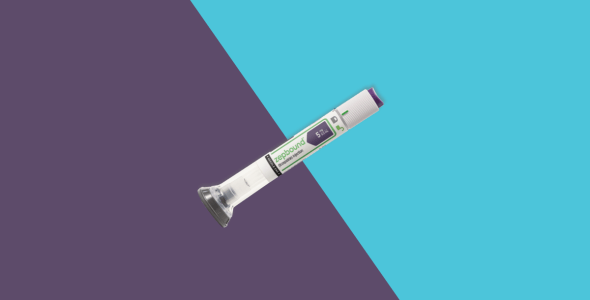
Tirzepatide is a dual GIP and GLP-1 receptor agonist manufactured by Eli Lilly, available under two brand names: Zepbound (FDA-approved for chronic weight management and obstructive sleep apnea) and Mounjaro (FDA-approved for type 2 diabetes). Both are available as once-weekly subcutaneous injections in prefilled pens ranging from 2.5 mg to 15 mg.
Treatment starts at 2.5 mg and increases by 2.5 mg every four weeks until reaching the maximum tolerated dose. The complete dosage chart and titration schedule are below.
Understanding tirzepatide
Tirzepatide works as a dual agonist at GIP (glucose-dependent insulinotropic peptide) and GLP-1 (glucagon-like peptide-1). These hormones are naturally produced by the body to reduce appetite and release insulin after food intake. Tirzepatide mimics the effects of these hormones to regulate appetite and promote blood sugar control.
It works for weight loss by slowing the rate at which food moves from the stomach into the duodenum. This effect gives a feeling of “fullness” for a longer time. Moreover, it promotes insulin release from the pancreas, inhibits glucagon secretion, and affects areas of the brain that control hunger.
Zepbound, a brand name of tirzepatide, is FDA-approved for weight management when combined with increased physical activity and a reduced-calorie diet in adults with:
- Obesity (BMI 30 or higher)
- Overweight (BMI 27 or higher with at least one weight-related condition such as high cholesterol levels, hypertension (high blood pressure), type 2 diabetes, and cardiovascular disease
- Moderate to severe obstructive sleep apnea (OSA)
Mounjaro contains tirzepatide as an active ingredient and is approved by the U.S. Food and Drug Administration (FDA) to promote blood sugar control in adult patients with type 2 diabetes when paired with a healthy lifestyle, such as dietary modifications and exercise.
Zepbound® (tirzepatide) dosage chart
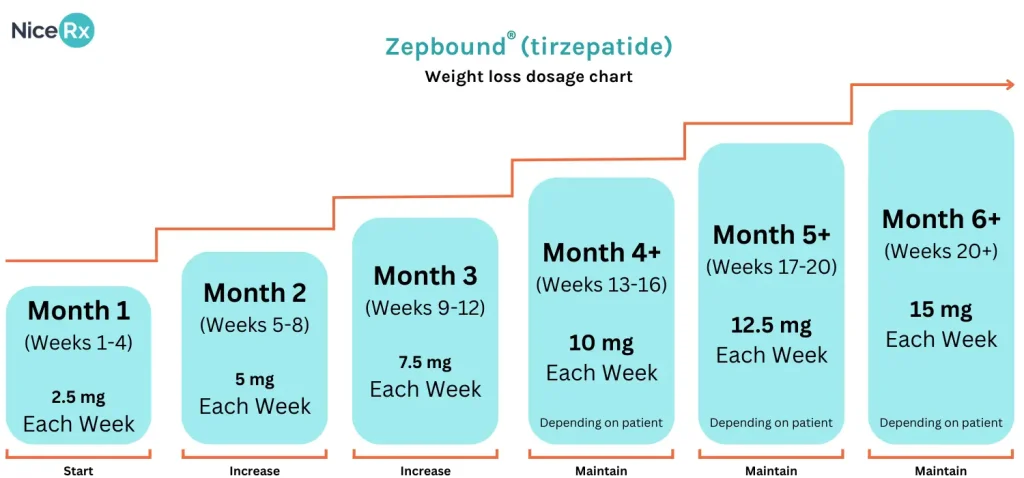
Zepbound® (tirzepatide) is popular for weight loss due to its effectiveness. However, it’s essential to follow the recommended dosing schedule to achieve optimal results. Incorrect dosing may lead to insufficient results or adverse effects. The standard prescribing dosing guidelines for Zepbound could look like:
| Week | Dose | Cumulative Time on Medication | Notes |
|---|---|---|---|
| 1–4 | 2.5 mg | Month 1 | Starter dose |
| 5–8 | 5 mg | Month 2 | First increase |
| 9–12 | 7.5 mg | Month 3 | — |
| 13–16 | 10 mg | Month 4 | — |
| 17–20 | 12.5 mg | Month 5 | — |
| 21+ | 15 mg | Month 6+ | Maximum dose |
Disclaimer: This chart is for informational purposes only. It does not replace medical advice from a healthcare professional. Always consult a healthcare provider before changing doses.
Starting dose
Zepbound is started at a lower dose of 2.5 mg once weekly for the first 4 weeks to prevent the risk of gastrointestinal side effects such as nausea and vomiting. The initial low dosage ensures your body gets used to the medication before the dosage is increased.
Dose escalation phase (titration)
After the first 4 weeks, if the medication is well tolerated, your healthcare provider will typically increase the dosage to 5 mg once weekly for the next 4 weeks (weeks 5-8). In weeks 9-12, the dosage will be escalated to 7.5 mg once weekly if tolerated by the patient. If needed, the dosage can be increased to 10 mg once weekly in weeks 13- 16, 12.5 in weeks 17-20, and 15 mg in weeks 21-24. During the titration phase, the dosage is increased by 2.5 mg increments every 4 weeks.
Maintenance dose
The recommended maintenance dosage of Zepbound for weight loss is 5 mg, 7.5 mg, 10 mg, 12.5 mg or 15 mg once weekly. For sleep apnea, 10 mg or 15 mg once a week is recommended.
Maximum dose
The maximum Zepbound dosage is 15 mg once weekly.
Compounded tirzepatide dosage chart
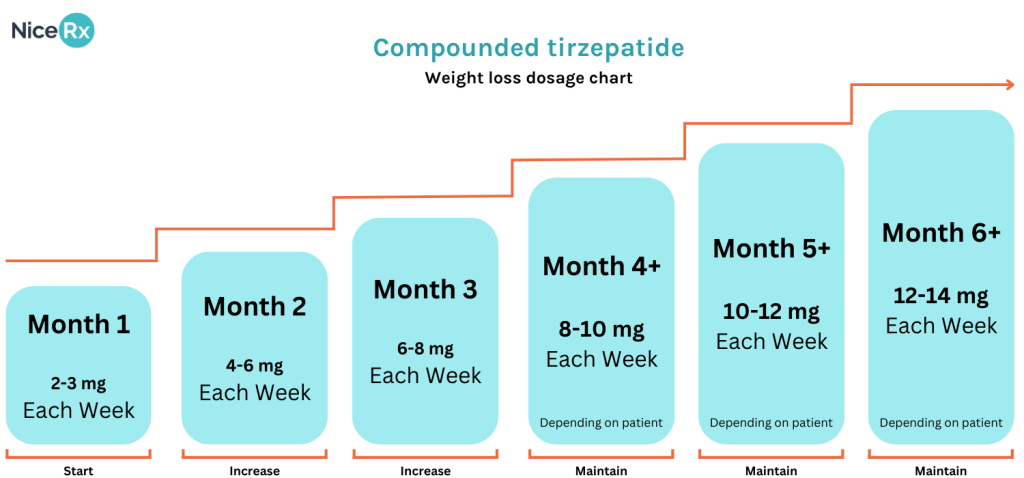
Compounded tirzepatide dosage also follows a personalized dosing schedule for each patient. While the compounded doses can vary by compounding pharmacy, a personalized weight loss dosing plan could look like:
Disclaimer: This chart is for informational purposes only and is not an FDA-approved protocol. It does not replace medical advice from a healthcare professional. Always consult a healthcare provider before changing doses. Compounded tirzepatide products have not been FDA-approved, and their safety and efficacy have not been evaluated by the FDA.
Starting dose
Compounded tirzepatide starting dose is 2-3 mg once weekly for the first month. The medication is started at a lower dosage to prevent gastrointestinal issues.
Dose escalation phase (titration)
Tirzepatide titration (dose escalation) typically follows this schedule:
- Month 2: 4-6 mg once weekly
- Month 3: 6-8 mg once weekly
- Month 4: If tolerated, increase to 8-10 mg once weekly
- Month 5: If the dosage needs to be escalated further, increase to 10-12 mg once weekly
- Month 6 and onward: If the dosage needs to be escalated further, increase to 12-14 mg once weekly
The maximum dosage is typically 14 mg once weekly if further glycemic control or weight loss is required.
Maintenance doses for compounded tirzepatide vary by pharmacy and individual provider protocol. Your prescriber will determine the appropriate dose based on your treatment response.
Maintenance dose
Once you reach the desired results for ongoing weight loss or glycemic control, the dosage you are on is typically continued as a maintenance dose. The typical tirzepatide maintenance doses for weight loss are 4 mg, 6 mg, 8 mg, 9.5 mg, 11.5 mg and 13.5 mg once weekly.
Maximum dose
The maximum tirzepatide dose is typically 14 mg once weekly. You can not exceed the maximum dose.
Tirzepatide weight loss results by dose: What SURMOUNT-1 shows
The amount of weight you lose on tirzepatide depends significantly on your dose. The SURMOUNT-1 clinical trial tracked weight loss outcomes across all three maintenance dose tiers over 72 weeks in adults with obesity or overweight. Results were achieved alongside a reduced-calorie diet and increased physical activity.
Dose-specific weight loss outcomes for tirzepatide
| Dose | Average Weight Loss | ≥5% Weight Loss | ≥10% Weight Loss | ≥15% Weight Loss | ≥20% Weight Loss |
|---|---|---|---|---|---|
| Placebo | 3.10% | ~35% | ~16% | ~9% | ~3% |
| 5 mg | ~15.0% | ~85% | ~69% | ~50% | ~30% |
| 10 mg | ~19.5% | ~89% | ~79% | ~65% | ~49% |
| 15 mg | 20.90% | 91% | ~83% | ~69% | ~57% |
Source: SURMOUNT-1 trial (Jastreboff et al., NEJM 2022). Trial duration: 72 weeks. Figures represent outcomes at the study endpoint. Individual results vary based on adherence, diet, physical activity, and individual metabolism. These results were achieved with a reduced-calorie diet and increased physical activity alongside medication.
Higher doses produce better outcomes. Patients on 15 mg lost approximately 6 percentage points more body weight on average than those on 5 mg. For a 200-pound patient, that difference translates to roughly 12 additional pounds lost.
Clinically significant weight loss is achievable at all maintenance doses. Even at the lowest maintenance dose of 5 mg, approximately 85% of participants lost at least 5% of their body weight. The threshold is generally associated with meaningful improvements in weight-related conditions such as blood pressure, blood sugar, and cholesterol.
Not reaching 15 mg does not mean treatment has failed. Many patients achieve their target weight loss at 5 mg or 10 mg and remain there as their maintenance dose. Your healthcare provider will determine the right dose based on your progress and tolerability. The goal is the lowest dose that keeps you at your target weight with manageable side effects.
Factors influencing tirzepatide dosage
Tirzepatide dosage depends on an individual’s body response to the medication. Everyone responds differently to the medication. You may experience side effects, while others may not. That is why it is important to get a personalized dosage schedule under medical supervision according to your body’s needs and tolerance.
Your weight
If you are obese and have a higher body mass index, you may need tirzepatide treatment for a longer time and at higher doses (if your body tolerates it) compared to those with a lower body mass index or those who are a bit overweight.
Your treatment goals
If you plan to lose more weight, you may need to continue tirzepatide for a longer time. Your prescriber will increase the dosage gradually according to your treatment goals and tolerance to tirzepatide side effects.
Everyone responds differently to medications
Dosage adjustments may be necessary based on individual response to the medication, including weight loss progress, blood sugar control, and tolerability of side effects. As well, genetic factors such as genetic variations in TCF7L2 genes may influence how long your body takes to lose weight.
Tolerance for side effects
The presence and severity of side effects can influence dosage adjustments. People experiencing severe side effects are prescribed lower dosages. In comparison, people with good tolerance who do not experience severe side effects can escalate their doses according to the standard prescribing schedule.
Other medications you’re taking
Tirzepatide lowers blood glucose levels. When used with insulin or sulfonylureas, it can cause low blood sugar levels. The lower dose of tirzepatide is preferred with these other medications to reduce the risk of hypoglycemic coma.
Other medical conditions
Dosage modification is generally not required with certain medical conditions such as liver and kidney disease. If you experience side effects, your healthcare provider may reduce the dosage.
Weight loss vs. diabetes management
The dosage of tirzepatide and the choice of tirzepatide brand are also based on whether tirzepatide is being used for weight loss or diabetes management. Zepbound is used for weight loss and obstructive sleep apnea. Mounjaro is indicated for type 2 diabetes. The dosage of the medication depends on how much weight loss and glycemic control are needed.
Work closely with your healthcare provider to determine the optimal dosage and monitor for any necessary adjustments as you progress with your treatment.
When to increase your tirzepatide dosage
Tirzepatide dose is typically increased every 4 weeks, but timing is not the only factor that determines when you should move up. Your body’s response to the current dose matters just as much as how long you have been on it.
The standard escalation protocol
Your healthcare provider will typically increase your dose by 2.5 mg every 4 weeks, following this progression:
- Week 1–4: 2.5 mg
- Week 5–8: 5 mg
- Week 9–12: 7.5 mg
- Week 13–16: 10 mg
- Week 17–20: 12.5 mg
- Week 21+: 15 mg (maximum dose)
Four weeks is the minimum time at each dose, but it is not a fixed deadline. Your provider may keep you at the same dose longer if you are still experiencing side effects or have not yet stabilized.
Signs that you may be ready to increase your dose
Your provider will typically consider a dose increase when:
- You have been on your current dose for at least 4 weeks with no significant side effects
- Nausea, vomiting, or stomach discomfort from the previous dose increase has resolved
- Your weight loss has plateaued at the current dose, and you have not yet reached your goal
- Your blood sugar levels (if you have diabetes) are not yet in your target range
Signs you are not ready to increase
Your provider will typically delay a dose increase if:
- You are still experiencing nausea, vomiting, diarrhea, or stomach pain from your current dose
- You have missed doses recently due to side effects
- You have experienced any serious adverse event at the current dose that has not fully resolved
Do you need to reach 15 mg?
No. The maximum dose is not the goal for every patient. Some people achieve their target weight loss at 5 mg or 10 mg and stay there as their maintenance dose. SURMOUNT-1 data show meaningful weight loss at all three maintenance dose tiers: approximately 15% at 5 mg, 19.5% at 10 mg, and 20.9% at 15 mg.
If you are losing weight consistently and tolerating your current dose well, your provider may recommend staying at that dose rather than continuing to increase the dose. The “right” maintenance dose is the lowest dose that keeps you at your goal weight with manageable side effects, and not necessarily the highest dose available.
What to ask your provider at each dose review
- Is my current weight loss progress on track for my goals?
- Have my side effects resolved enough to consider increasing?
- Would staying at this dose longer be a better option than moving up now?
- If I reach 15 mg and plateau, what are my options?
Never increase your tirzepatide dose on your own. Dose escalation decisions should always be made by your prescribing healthcare provider based on your individual progress, tolerability, and health status.
How to use tirzepatide
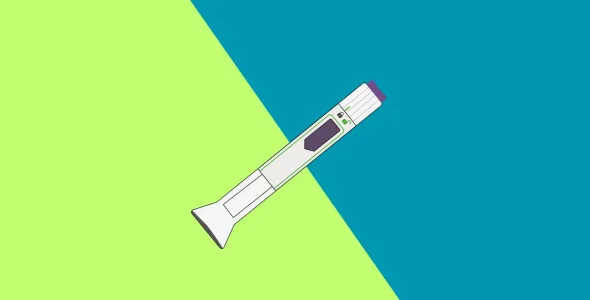
Tirzepatide is injected subcutaneously (under the skin) once weekly in the abdomen, upper thigh, or back of the upper arm using a prefilled injection pen or syringe. Rotate injection sites each week to avoid irritation.
Before injecting:
- Wash your hands thoroughly with soap and water
- Check the liquid in the pen or vial — it should be clear, colorless, or slightly yellow; do not use it if it is cloudy or discolored
- Confirm the correct dose before injecting
Injecting with a pen (Zepbound or Mounjaro):
- Remove the base cap and place the pen flat against your skin at a 90° angle
- Press and hold the button for 10 seconds
- The first click signals the injection has started; the second click means the dose is complete
Injecting with a vial (compounded or Zepbound single-dose vial):
- Draw air into the syringe equal to your prescribed dose, inject it into the vial, then withdraw the correct amount of medication
- Remove air bubbles by tapping the syringe gently
- Insert at a 90° angle and push the plunger slowly
Storage:
- Refrigerate at 36–46°F (2–8°C); never freeze
- If traveling, tirzepatide can be stored at room temperature (up to 86°F / 30°C) for up to 21 days
- Do not use a pen that has been dropped or struck against a hard surface
Disposal:
- Place used pens and syringes in an FDA-approved sharps container — never in household trash
Side effects and safety considerations
Generally, tirzepatide has mild side effects that are typically seen when you start the medication or increase the dose. These side effects normally subside over time as your body gets used to the medication. The most common side effects of the medication include:
- Nausea
- Vomiting
- Gastrointestinal issues
- Stomach pain
- Injection site reactions
- Thinning or hair loss
- Low blood pressure
- Indigestion and excessive burping
- Mild allergic response to the medication
Sometimes, tirzepatide can cause severe side effects that need immediate medical attention. These include:
- Hypoglycemia (low blood sugar)
- Acute pancreatitis (inflammation of the pancreas)
- Changes in vision (due to diabetic retinopathy)
- Gallbladder problems
- Kidney injury
- Severe stomach problems
- Allergic or hypersensitivity reaction
If you need to have surgery while taking tirzepatide, inform your healthcare provider, as the medication increases the risk of aspiration during anesthesia or deep sedation. As well, if you are taking other anti-diabetes medication along with tirzepatide, it may increase the risk of hypoglycemia.
These side effects can occur due to a rapid escalation of dosage. To prevent these side effects, increase the dosage slowly, as recommended by your healthcare provider.
Tirzepatide is not recommended for people with a family history of thyroid tumors or a family history of medullary thyroid carcinoma (MTC) and MEN2 syndrome (multiple endocrine neoplasia type 2 syndrome), as tirzepatide increases the potential risk of developing these tumors in rodents.
Always use adequate contraception when using this medication. Do not take this medication if you are pregnant, trying to get pregnant or breastfeeding.
Tirzepatide has a boxed warning for the risk of thyroid C-cell tumors. Studies also show that tirzepatide may increase the risk of gallbladder disease.
Frequently asked questions
What should I do if I miss a dose of tirzepatide?
If more than 4 days have passed since the missed dose, skip the missed dose and take the next weekly dose on the regularly scheduled day. If less than 4 days (96 hours) have passed, take the missed dose as soon as possible and then take the next dose on the regularly scheduled day. Talk to your healthcare provider if you have been skipping your dose for over two weeks. They may prescribe a lower dosage than the scheduled one.
What is the starting dose of tirzepatide?
The starting tirzepatide dose is 2.5 mg once weekly. The starting dose is administered for the first 4 weeks, on the same day each week and at the same time.
Can I start with a higher dose of tirzepatide to lose weight faster?
No, it is not recommended to start with a higher dose to lose weight faster. Higher doses are associated with potential side effects such as severe abdominal pain, stomach problems, nausea, vomiting, diarrhea, and constipation. To prevent these side effects, the dosage is escalated slowly according to your tolerance.
What happens if you take too much tirzepatide?
There is limited information on what happens if you take too much tirzepatide. However, you are more likely to experience severe side effects such as nausea, vomiting, hypoglycemia or low blood sugar levels, and diarrhea with high dosage. Hypoglycemia can lead to a coma, which is a medical emergency.
How often should doses be adjusted?
Tirzepatide dosage is typically adjusted every 4 weeks until you reach the maximum tolerated maintenance dosage. In case of side effects, fluctuations in blood sugar levels, sudden weight changes, and comorbid conditions, your healthcare professional may adjust the dosage.
What should I do if I experience side effects?
Generally, tirzepatide is well tolerated. Some people may experience mild side effects such as nausea, diarrhea, and constipation, which normally go away on their own as their body gets used to the medication. Drink plenty of fluids and eat whole foods to prevent nausea. Eat fiber-rich food such as fruits and vegetables, whole grains, and lean proteins to tackle constipation. In case of diarrhea, stay hydrated and consult your doctor for over-the-counter medication. If you experience severe side effects, consult your healthcare provider before taking the next dosage.
Is there a maximum dose for tirzepatide?
Yes, 15 mg once weekly is the maximum dosage for tirzepatide.
How long will it take to reach the maximum dose?
It may take 20 or more weeks to reach the maximum dosage (15 mg once weekly), depending on your body’s tolerance. Tirzepatide dosage starts at 2.5 mg once weekly. The dosage is escalated by adding 2.5 mg to the existing dosage every 4 weeks. There is no fixed time frame to reach the maximum dosage.
Can I adjust my tirzepatide dosage on my own?
No, you should not try to adjust the tirzepatide dosage on your own. Always consult with your healthcare provider for a customized treatment plan. They will measure your blood sugar levels, body mass index, HbA1c, and vital statistics to adjust the dosage.
Is the dosage the same for weight loss and diabetes?
Tirzepatide dosage for weight loss and diabetes is the same, but you need to use different brands of the medication. Mounjaro is used for the management of type 2 diabetes, while Zepbound is indicated for weight loss and sleep apnea. Both medications start at the same weekly dose of 2.5 mg. The dosage is increased in 2.5 mg increments every 4 weeks until reaching the maximum tolerated dose.
How long does it take to see results with tirzepatide?
Tirzepatide reaches its peak concentration in the body within 8-72 hours. It starts working as soon as it is injected. However, it takes a few weeks to promote significant weight loss and blood sugar control. A clinical study shows that tirzepatide caused changes in body weight at weeks 4, 12, and 24. Weight changes became more significant over time. Tirzepatide 5 mg showed an average weight loss of more than 5% of body weight at the median time of 16 weeks, while 10 and 15 mg took 12.4 weeks to show significant weight changes and glycemic control.
How do I change my tirzepatide injection day?
If you plan to change the tirzepatide injection day, take the next dosage at least 3 days (72 hours) after the previously scheduled day. For example, if you usually administer tirzepatide on Sundays, you can administer the next dose on Wednesday or any day after Wednesday.
You can also speak to your doctor. They will help you safely change the injection day.
What is compounded tirzepatide?
Compounded tirzepatide is prepared by compounding pharmacies according to patients’ needs. Compounding pharmacies may add extra ingredients (like vitamin B), remove some ingredients, or use different strengths of ingredients as prescribed by a healthcare professional to meet an individual’s needs. For example, if a patient is allergic to a certain ingredient in the brand-name drug, compounding pharmacies can make a customized version of the medication to accommodate the patient’s individual needs.
What’s the difference between compounded tirzepatide and Zepbound?
Zepbound is the FDA-approved brand name of tirzepatide. Manufactured by Eli Lilly, the medication is indicated for weight management and weight-related complications such as sleep apnea. Compounded tirzepatide is a custom-made medication that is manufactured by compounding pharmacies to meet patients’ needs and is not approved or reviewed by the FDA.
Conclusion
Tirzepatide dosage starts with a low dose of 2.5 weekly for the first 4 weeks. The lower dose helps reduce the risk of side effects while your body gets used to the medication.
The dosage is increased to 5 mg once weekly for the next 4 weeks. If needed, the dosage is increased by 2.5 mg increments every 4 weeks until you reach the maintenance dose. The maximum dose is 15 mg once weekly.
Several factors, such as eating habits, lifestyle, genetics, an individual’s tolerance to medication, comorbid health conditions, and taking other medications such as insulin and sulfonylureas, can influence the dosage of tirzepatide.
Always follow the dosage schedule prescribed by your healthcare provider. Do not increase or adjust the dosage on your own, as it can lead to severe side effects. Make regular follow-up visits so your doctor can monitor your progress and make necessary adjustments to the dosage as needed. If you experience any side effects, consult your healthcare provider and seek medical advice.