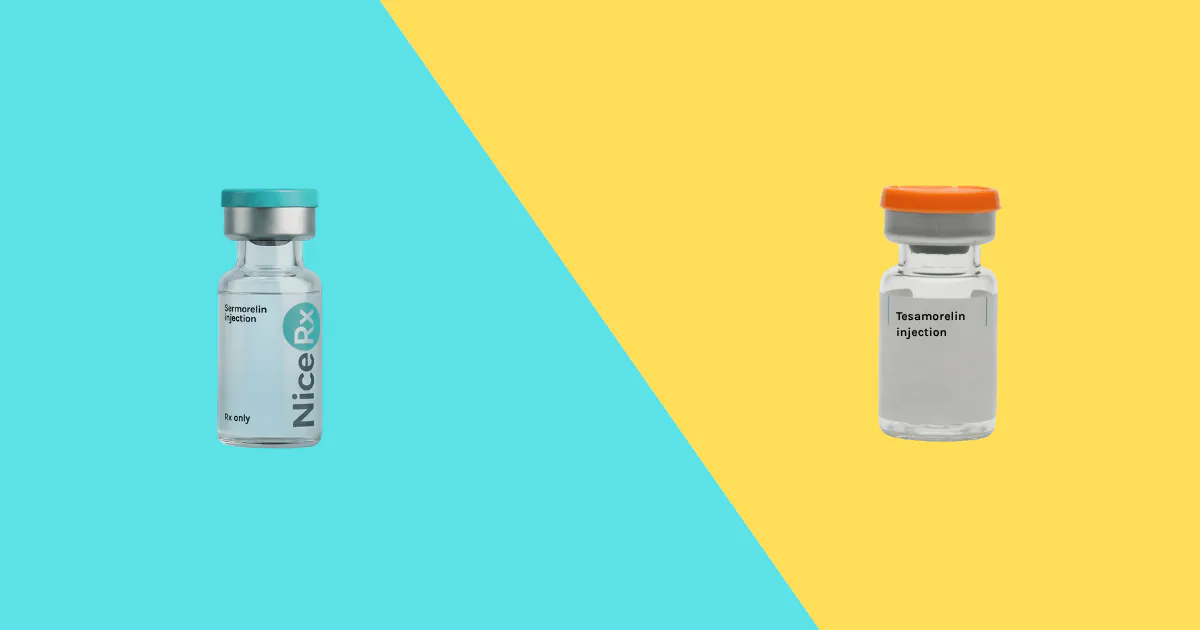
Tesamorelin vs Sermorelin: What’s the difference and which works best?
Sesamorelin is proven to target visceral fat — originally in HIV patients, now increasingly used off-label — while sermorelin supports overall wellness and hormone balance.
Key highlights
- Growth hormone levels naturally decline with age, which can lead to fatigue, muscle loss, and weight gain. That's why many people turn to peptide therapy as a modern solution.
- Tesamorelin and Sermorelin both increase growth hormone, but they work differently. Tesamorelin targets visceral fat in HIV-associated patients, while Sermorelin supports overall wellness and hormone balance.
- Tesamorelin is FDA-approved for treating HIV patients with lipodystrophy. Sermorelin was FDA-approved in 1997 for treating children with growth hormone deficiency. Currently, Sermorelin is not FDA-approved for any indication in adults or children and is available off-label via compounding pharmacies with a prescription.
- Sermorelin works gradually by improving sleep, recovery, and IGF-1 levels, whereas Tesamorelin delivers stronger metabolic effects and faster fat-loss results, especially around the abdomen.
- Tesamorelin has a longer half-life and greater potency for metabolic effects. While Sermorelin has a shorter half-life (10-20 minutes), it aligns with the body's natural pulsatile GH release and produces gradual results over months.
- You need a prescription from a licensed healthcare provider for both peptides. The choice of the right medication depends on your goals, budget, and overall health condition.
Synthetic growth hormone (HGH) injections can be expensive and may disrupt your body’s natural hormone balance. As a result, many people are now shifting toward growth hormone secretagogues, which work with your body to stimulate the endogenous GH (growth hormone) synthesis. As you enter midlife, your growth hormone levels decline naturally, which may lead to increased fatigue, loss of muscle mass, and stubborn weight gain. This is where peptide therapy comes in as a modern solution that helps men and women restore energy, improve body composition, and reclaim their vitality.
Many people think that these medications can cause weight loss. However, weight loss is not a specific goal when choosing Tesamorelin and Sermorelin. You need to specify your goal, such as body fat loss, muscle preservation, or improvement in overall body composition, before starting these medications.
Tesamorelin and Sermorelin are often used interchangeably, but they are different compounds with distinct roles and effects. Tesamorelin is used for reducing stubborn visceral fat, whereas Sermorelin supports long-term vitality by restoring the body’s natural hormone balance.
This article provides a clear, science-backed comparison to help you understand which peptide aligns with your specific goals, whether that’s targeted fat loss or overall rejuvenation.
What are peptides?
Peptides are short chains of amino acids that act as signaling molecules in the body and help regulate important functions like hormone release, metabolism, and tissue repair.
Peptides also influence the production of growth hormone (GH). Your anterior pituitary gland releases GH that plays an important role in fat metabolism, muscle growth, recovery, and overall vitality. Once released, GH stimulates the liver to produce insulin-like growth factor 1 (IGF-1), which is responsible for muscle development, fat loss, and cell repair.
Peptides used in therapy often act as secretagogues, which means they stimulate your body to produce its own growth hormone naturally, rather than introducing synthetic human growth hormone (HGH) from the outside. This keeps the process more aligned with your body’s normal function. They work through the pituitary GHRH axis, where the hypothalamus sends signals (via growth hormone-releasing hormone) to the pituitary gland to release growth hormone in natural pulses.
This is why peptides are often preferred over direct HGH injections because they mimic the body’s natural rhythm, reduce the risk of shutting down your own hormone production, and are generally considered safer than synthetic growth hormones.
GHRH analogs are synthetic peptides that mimic the action of natural growth hormone-releasing hormone, which is produced in the hypothalamus to stimulate the growth hormone production from the pituitary gland. These analogs help your body restore its own hormone production rather than replacing it.
What is Sermorelin?
Sermorelin is a synthetic analogue of GHRH (growth hormone-releasing hormone) that activates the anterior pituitary gland to increase the secretion of growth hormone in your bloodstream in a natural pulsatile manner. Sermorelin is not FDA-approved. It was FDA-approved under the brand name Geref, which has been discontinued. It is now only available off-label via licensed compounding pharmacies.
The potential benefits of Sermorelin therapy include the following:
- Help counter age-related GH decline (sarcopenia)
- Improve energy levels and stamina
- Enhances sleep quality, including deep sleep and slow wave sleep
- Supports skin elasticity and collagen production
- Promotes lean muscle mass gain and tissue recovery over time
- Provides hormonal support
- Improves bone density
Sermorelin works gradually and is intended for long-term use. It is one of the most commonly prescribed peptides for general anti-aging due to its safety profile and lower cost.
What is Tesamorelin?
Tesamorelin is a synthetic peptide analogue of GHRH (growth hormone-releasing hormone) that also activates your pituitary gland to boost growth hormone production in your body. However, it is more potent and has a specific, powerful effect on metabolism due to its molecular structure.
Tesamorelin is FDA-approved under the brand name Egrifta for treating extra visceral fat in HIV-associated patients with lipodystrophy. Lipodystrophy is a metabolic condition characterized by abnormal fat distribution, an increased lipid level (hyperlipidemia), and insulin resistance.
Its use for general belly fat reduction is off-label, which means it is legally prescribed but not backed by the same clinical trial evidence as the FDA-approved indication. Consult with your healthcare provider before taking Tesamorelin for excess abdominal fat reduction.
Tesamorelin has a longer half-life than Sermorelin and stays longer in the body. It has a unique ability to specifically target visceral adipose tissue fat (the dangerous fat surrounding the organs). This is why it is often referred to as a “belly fat” drug, as it is the only peptide officially approved to reduce this type of fat in HIV patients. The key benefits of Tesamorelin include the following:
- It significantly reduces the fat around visceral adipose tissue (VAT).
- It increases insulin-like growth factors-1 (IGF1) levels in your body and supports metabolism.
- Tesamorelin improves cholesterol and lipid profile.
- It is widely used off-label for stubborn fat loss in non-HIV patients.
- Some emerging research suggests that Tesamorelin improves cognitive function, brain health, and cardiovascular health, but these benefits are not as robustly established as its visceral fat-reduction indication.
Tesamorelin delivers faster and more visible body composition changes that make it ideal for those who want targeted fat loss rather than gradual and long-term hormone optimization.
Tesamorelin vs. Sermorelin: Head-to-head comparison
Both Tesamorelin and Sermorelin are growth hormone analogs and have different mechanisms of action.
| Tesamorelin | Sermorelin | |
|---|---|---|
| Primary Benefits | Reduces visceral fat (belly fat and improves metabolism | Improves sleep, energy, and overall hormone balance |
| Mechanism | Full GHRH analog that promotes strong and targeted GH release | GHRH fragment that stimulates pulsatile GH release |
| FDA Approval | Approved for HIV-associated lipodystrophy | Approved for treating childern with growth hormone deficiency |
| Injection Frequency | Typically once daily | Typically once daily (at night) |
| Half-Life | Longer-acting | Short (10–20 minutes) |
| Cost | $3,085 | $150-$500 |
| Best For | Targeted fat loss (visceral fat) | Long-term wellness and anti-aging |
Efficacy: Fat loss vs. general wellness
Sermorelin is effective, but it works gradually and increases growth hormone (GH) levels in your body by stimulating the pituitary gland. This growth hormone signals your liver to produce IGF-1, which is responsible for muscle repair, fat metabolism, tissue regeneration, and overall well-being. This is why its effects are gradual. Sermorelin improves the body’s overall function, leading to better sleep quality, recovery, energy levels, and lean body mass maintenance over time.
In contrast, Tesamorelin is superior to Sermorelin for metabolic changes. Clinical trials also showed that it can significantly reduce visceral fat (the deep belly fat around the organs). However, this effect is highly targeted and only reduces the harmful fat around the organs, not stored fat.
Molecular structure and half-life
Sermorelin contains only the first 29 amino acids of the natural GHRH hormone. This shorter structure is enough to trigger growth hormone release, but your body also breaks it down very quickly. Its half-life is only about 10-20 minutes. Therefore, it acts like a quick signal and clears out fast. That’s why it’s typically taken daily, usually at night, to match your body’s natural hormone rhythm.
Tesamorelin contains the full 44-amino-acid sequence and is bio-identical to natural GHRH, with a slight modification to resist breakdown in the body. It has a longer half-life and stays active longer, which leads to more sustained and consistent stimulation of growth hormone.
FDA approval and legal status
Sermorelin was initially approved by the U.S Food and Drug Administration (FDA) in 1997 under the brand name Geref for treating children with growth hormone deficiency. However, the medication was discontinued on December 2, 2008, by the manufacturer for commercial reasons and not due to safety concerns.
Currently, the medication is not available commercially, but you can buy it through U.S.-licensed compounding pharmacies when prescribed by a licensed healthcare provider. Sermorelin is not FDA-approved for anti-aging or age-related hormone decline, but doctors commonly prescribe it off-label in wellness clinics.
Tesamorelin is FDA-approved under the brand name Egrifta specifically for treating HIV-associated lipodystrophy (visceral fat accumulation). This approval gives it strong clinical credibility, especially for targeted fat loss. However, using it for general weight loss or cosmetic purposes is considered off-label.
Side effects and safety profile
Both Tesamorelin and Sermorelin are generally well-tolerated, but they may cause side effects. The most common side effects of the medications include the following:
- Injection site reaction
- Mild joint pain
- Water or fluid retention (edema)
Sermorelin has a low risk profile and is often considered a gentle starting point for peptide therapy. Side effects of Sermorelin are usually mild and temporary and fade as the body adjusts to the medication, making it a preferred option for long-term use. Sermorelin may also cause vivid dreams, which are linked to its effect on deep sleep and growth hormone release at night.
In contrast, Tesamorelin requires strict medical monitoring because it can affect blood sugar levels and, in some cases, cause glucose intolerance. Therefore, patients may need to check their glucose levels regularly to ensure safety, especially if they have insulin resistance or diabetes. In rare cases, the body may develop antibodies against the peptide, which could potentially interfere with natural hormone GHRH signaling.
You should not use these peptides if you have a history of active cancer or malignancy, because growth hormones increase IGF-1 levels in your body that may potentially stimulate tumor growth. This is a standard precaution with all growth hormone-related therapies.
These medications are contraindicated during pregnancy and breastfeeding. They should also be used cautiously in individuals with epilepsy or untreated hypothyroidism.
Patients with certain medical conditions, such as obesity, hyperglycemia, or elevated plasma triglyceride levels, should be cautious and consult with their healthcare provider before using these medications, as these conditions may increase the risk of adverse effects or alter the drug’s response.
Both Sermorelin and Tesamorelin are prohibited under WADA for competitive athletes. Competitive athletes who are subjected to WADA anti-doping testing should not use either peptide because growth hormone secretagogues are on the prohibited substances list.
Visceral fat vs. subcutaneous fat
Tesamorelin primarily targets visceral fat, which is the deep fat stored around internal organs such as the liver, stomach, and intestines. It does not significantly affect subcutaneous fat, which is the pinchable fat located just under the skin.
Visceral fat is considered more dangerous because it is strongly linked to cardiovascular disease, insulin resistance, and metabolic syndrome, especially in the U.S., where these conditions are highly prevalent. Tesamorelin can help lower long-term health risks and improve overall metabolic health by reducing this type of fat.
Dosage, administration, and timing
Both Sermorelin and Tesamorelin are administered via subcutaneous injection (under the skin), usually in the abdominal area. Small, insulin-style needles are used to administer these peptides. Most patients find the process quick and painless.
The standard dose of Sermorelin is 100-300 mcg per day and may be increased up to 500 mcg if your body can tolerate it. It is administered as a once-daily injection at night before bedtime to mimic the body’s natural growth hormone release during deep sleep
Tesamorelin is typically prescribed at a dose of 2 mg once daily, which is the standard FDA-approved dosage for Egrifta. It can be taken either in the morning or at night, depending on the treatment protocol and patient preference. In some cases, it is used in cycling protocols such as 5 days on and 2 days off, although many patients may also use it daily when approved by their healthcare provider for consistent results.
Can you stack them?
In some cases, you can stack Tesamorelin and Sermorelin, but it requires careful planning and medical supervision. For example, you might use Tesamorelin for a short-term “cut” (e.g., 3 months) to aggressively reduce visceral fat, while continuing Sermorelin for sleep support and long-term hormone balance. This allows targeted fat loss without completely giving up the benefits of Sermorelin.
However, since both act on the same GHRH pathway, stacking them is not always necessary and may offer limited added benefit compared to combining different classes of peptides.
A more common and effective approach, subject to approval by a licensed healthcare professional, is stacking with complementary peptides, such as:
- Ipamorelin (GHRP), which enhances growth hormone release through a different pathway to create a synergistic effect. This concept is similar to the popular CJC-1295 + Ipamorelin stack, in which GHRH and GHRP are paired to produce stronger, more consistent growth hormone pulses.
- GLP-1 medications (like Semaglutide) to support appetite control and enhance overall fat loss results. This combination is not suitable for everyone, is used off-label with limited human clinical evidence, and should be used only when prescribed by a healthcare provider.
Cost and accessibility
Tesamorelin is a brand-name medication that costs about $ 3,085 per month.
Sermorelin costs $150-$500 per month and can be paid out of pocket.
Both peptides require a prescription from a licensed healthcare provider in the U.S. You cannot legally purchase them over the counter. Most patients obtain these medications through wellness clinics or telehealth providers, which also handle the prescribing and ongoing monitoring to ensure safe and effective treatment.
FAQs
Can you take Tesamorelin and Sermorelin together?
Yes, you can take Tesamorelin and Sermorelin together when prescribed by a healthcare provider, but this combination offers limited added benefits because both medications work on the same receptor (GHRH pathway). Most treatment plans use one or the other, depending on your goals.
How long does it take to see results?
If you are taking Sermorelin, you may experience noticeable changes in your body composition and sleep after 3-6 months of consistent use. In contrast, clinical studies showed that people using Tesamorelin experienced visceral fat reduction (VAT) after 6 months of consistent use along with a healthy lifestyle change.
Are these peptides legal in the USA?
Yes, these peptides are legal in the U.S., but only when prescribed by a licensed healthcare provider. They are not available over the counter, and purchasing them as “research chemicals” is not considered legal or safe.
Will insurance cover Tesamorelin or Sermorelin?
Insurance rarely covers Sermorelin, especially when used for anti-aging or wellness purposes.
Tesamorelin (Egrifta) may be covered in specific cases, such as for HIV-associated lipodystrophy, but it is not typically covered for general weight loss or off-label use.
Who should avoid these peptides?
You should avoid these peptides if you have active cancer, as increased growth factors may promote tumor growth. Individuals with severe or uncontrolled diabetes should exercise caution and closely monitor their blood sugar levels, since these therapies can affect blood sugar levels. Pregnant or breastfeeding women should not use these peptides due to potential risks to the baby.
Which peptide is right for you?
Peptides are not for everyone. The choice of peptide depends on your goal, body type, and budget.
Scenario A: The biohacker or general wellness seeker
If your goal is to improve sleep, energy, recovery, and overall vitality, then Sermorelin may be best for you. It offers a safe, gradual approach to counter the effects of aging without causing severe metabolic changes.
Scenario B: The “last 20 pounds” struggle (visceral fat)
If you’ve hit a plateau and stubborn belly fat isn’t responding to diet and exercise, Tesamorelin may be the better option. It works as a targeted tool for visceral fat, especially when blood work shows low GH levels.
Scenario C: The budget-conscious patient
If cost is a concern, start with Sermorelin. It provides strong value and noticeable benefits, allowing you to see how your body responds before moving to more expensive options.
Scenario D: The GLP-1 user experiencing muscle loss
If you are on Wegovy, Zepbound, or Orforglipron and experiencing rapid weight loss along with muscle loss or fatigue, then Sermorelin may be considered for preserving lean mass during active weight loss therapy.
Conclusion
Sermorelin and Tesamorelin are growth hormone secretagogues. If your goal is better sleep, anti-aging support, and overall health optimization, Sermorelin may be more suitable. It works gradually and helps restore your body’s natural hormone rhythm. On the other hand, Tesamorelin is a better choice if you are relatively lean but struggle with stubborn belly fat and need a more targeted metabolic intervention.
For patients seeking general wellness and hormone optimization, Sermorelin is typically the starting point, while Tesamorelin may be more appropriate for those with documented visceral fat accumulation. The “best” choice depends entirely on your metabolic profile, health status, and specific goals.
Consult a qualified healthcare provider and get your IGF-1 and fasting insulin levels tested to determine the most effective and safe approach for your needs.